 Tromsø Reindeer Sledding
Best Time of Year for Reindeer Sledding in Tromsø: Month-by-Month Guide
The best time for reindeer sledding in Tromsø is December to March, when the camps have a reliable snow base and the season runs at full strength. Sledding is possible from roughly November into early April, but the edges of that window depend on the snow arriving on time and lasting. December to January brings polar night and blue twilight, with evening departures adding a real chance of northern lights. February and March bring back the daylight and brighter light for photos. Compare every departure month by month on our homepage listing of Tromso reindeer sledding tours by month. The month you pick changes the light, the cold and the crowd level far more than it changes the sled ride itself.
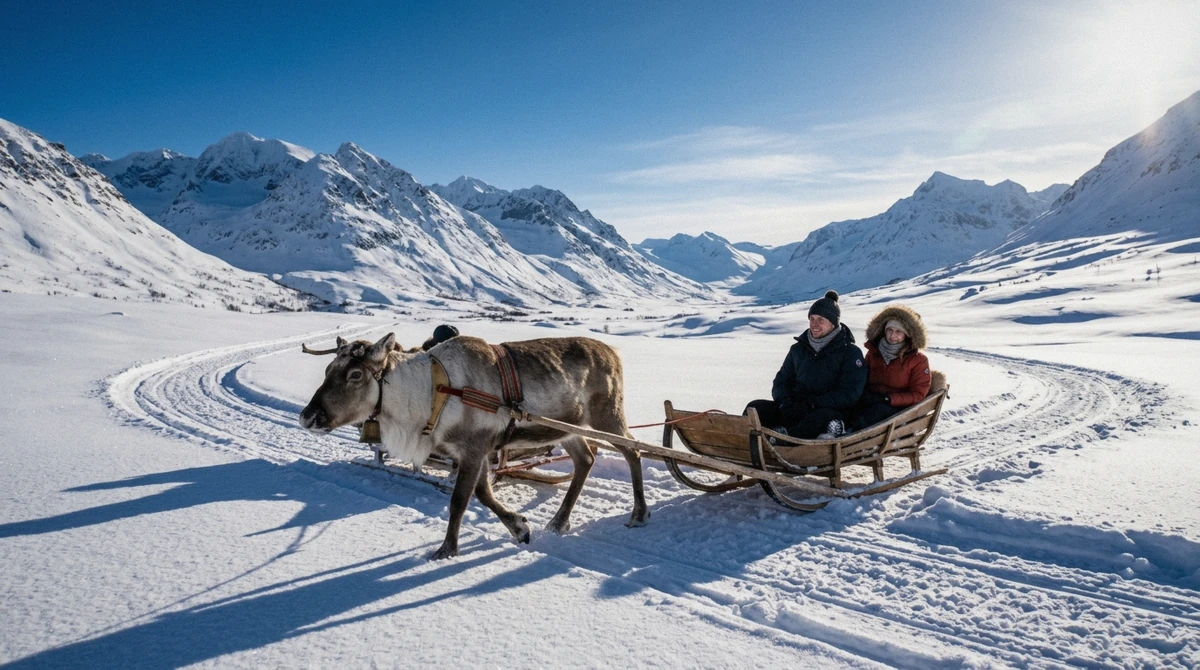
Illustrative image of a reindeer sled ride in late-winter sun.
Quick answer December to March is the reliable window, with February and March the strongest all-round months
Reindeer sledding in Tromsø runs from roughly November to early April, and December to March is the most reliable stretch because the snow base is settled. February and March are the strongest all-round months, with returning daylight and long twilight. December and January trade daylight for polar night, blue twilight and evening aurora chances on night departures. October and late spring into summer have no sledding, because there is no ridable snow at the camps. Summer visits are feeding and culture visits only, with no sled component.
Key takeaways
- The core window is December to March, when trail conditions are most settled, as on Sami reindeer sledding and feeding with a traditional lunch
- February and March add stable daylight without the deepest cold of midwinter
- October and most of spring and summer have no sledding, so summer visitors should look at reindeer feeding and Sami culture with lunch in a turf hut instead
- Evening departures in the dark months pair the sled run with aurora watching, like night reindeer sledding with a three-course Sami dinner
- Early February brings Sámi Week to Tromsø, with reindeer racing and lasso throwing in the city streets, so book that week early
Best Time for Reindeer Sledding by Traveler Type
If You want the safest bet for sledding actually running
Book February or March, when the snow base is deepest and daylight has returned, for example a day in the Tamok valley such as Camp Tamok reindeer sledding
If You want northern lights with your sled ride
Choose December or January and pick an evening departure, when the long darkness gives aurora tours their widest window
If You are traveling with children or dislike deep cold
Aim for late February or March, when temperatures moderate and there is real daylight for the ride, see our guide to reindeer sledding in Tromsø with kids
If You care most about Sami culture, not the sled
Plan for early February around Sámi Week, and pair the city events with a camp visit like a small-group Sami family reindeer visit with lasso throwing
If Your dates are fixed in October or summer
Skip the sled and book a feeding and culture visit instead, which the herders run outside the snow season
Seasons at a Glance
The table below compares the twelve months for reindeer sledding from Tromsø. The Verdict column gives a short call for sledding specifically, not for visiting Tromsø in general. Remember that sledding depends on snow at the camps outside the city.
How each month typically performs for sledding, based on how the listings structure their season and what happens in Tromsø through the year.
| Month | Sledding | Light | Average high | Verdict |
|---|---|---|---|---|
| January | Sledding season, snow-dependent | Polar night until about 15 January, then short days | -1.0°C (30°F) | Good, dark, aurora on evening tours |
| February | Inside the most reliable window | Daylight returning, Sámi Week early in the month | -1.2°C (30°F) | Best balance of snow and daylight |
| March | Inside the most reliable window | Long, bright days | 0.6°C (33°F) | Best for daylight photos |
| April | Early April only, snow-dependent | Long days | 4.1°C (39°F) | Go early in the month, check the snow policy |
| May | No sledding | Midnight sun from about 18 May | 8.8°C (48°F) | Feeding and culture visits only |
| June | No sledding | Midnight sun | 13.0°C (55°F) | Feeding and culture visits only |
| July | No sledding | Midnight sun until about 26 July | 16.3°C (61°F) | Feeding and culture visits only |
| August | No sledding | Nights return | 15.0°C (59°F) | Feeding and culture visits only |
| September | No sledding | Days shortening | 10.9°C (52°F) | Feeding and culture visits only |
| October | No sledding | Days shortening fast | 5.2°C (41°F) | Too early to ride |
| November | Season opens if snow allows | Polar night from about 26 November | 2.1°C (36°F) | Possible, snow not yet reliable |
| December | Sledding season, snow-dependent | Polar night, blue twilight at midday | 0.3°C (33°F) | Good, dark, aurora on evening tours |
The shoulder months carry the real risk. November and April rides depend on how much snow lies at the camps. December and January are fully reliable for snow but take some adjustment to the darkness.
Tromsø Temperatures and Snow Through the Year
Tromsø sits at about 69 degrees north, so its climate is oceanic subarctic, warmed by the Gulf Stream. Winters are milder than the latitude suggests and summers are cool. The figures below are typical patterns rather than forecasts, drawn from the climate record summarized for the city on Wikipedia's Tromsø page.
Typical temperature and precipitation patterns by month, given qualitatively because conditions swing widely from year to year.
| Month | Average high | Average low | Note |
|---|---|---|---|
| January | -1.0°C (30°F) | -5.3°C (22°F) | Polar night until about 15 January |
| February | -1.2°C (30°F) | -5.6°C (22°F) | Coldest month on average |
| March | 0.6°C (33°F) | -4.4°C (24°F) | Long, bright days on the snow |
| April | 4.1°C (39°F) | -1.6°C (29°F) | End of the sledding season |
| May | 8.8°C (48°F) | 2.4°C (36°F) | Snow leaving the lowlands |
| June | 13.0°C (55°F) | 6.2°C (43°F) | Midnight sun |
| July | 16.3°C (61°F) | 9.0°C (48°F) | Warmest month |
| August | 15.0°C (59°F) | 8.3°C (47°F) | Nights return late in the month |
| September | 10.9°C (52°F) | 5.3°C (42°F) | Autumn |
| October | 5.2°C (41°F) | 0.9°C (34°F) | Days shortening fast |
| November | 2.1°C (36°F) | -1.9°C (29°F) | Polar night from about 26 November |
| December | 0.3°C (33°F) | -3.9°C (25°F) | Polar night, blue midday twilight |
Two patterns matter for planning. First, Tromsø's coast is warmer than the inland valleys, so sleet in the city can sit as dry ridable snow at the camps. Second, the figures above are long-term patterns, so check the current forecast close to your dates before locking in a specific day.
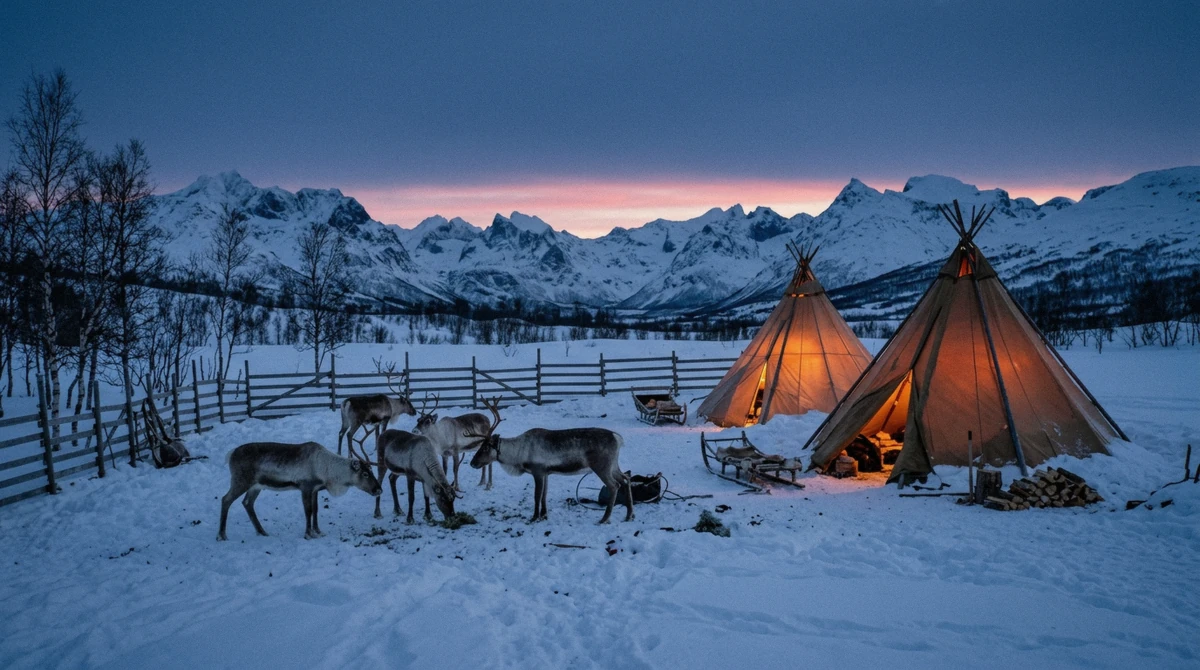
Illustrative image of a camp in polar-night twilight.
The Best Month If You Only Have One Morning
If your itinerary allows a single morning for sledding, rank the months this way. Each pick carries one trade-off, stated plainly.
| Rank | Month | Why | Trade-off |
|---|---|---|---|
| 1 | March | Settled snow, real daylight, easy photos | Shorter nights for the aurora |
| 2 | February | Reliable snow, daylight back, Sámi Week nearby | Cold snaps still bite |
| 3 | December | Full winter conditions, aurora on night runs | Almost no daylight for day tours |
| 4 | January | Deep winter, polar night until mid-January | The darkest and often coldest stretch |
A morning departure like Sami reindeer sledding and feeding with a traditional lunch runs in daylight from late February onward, which makes the ride far easier to photograph.
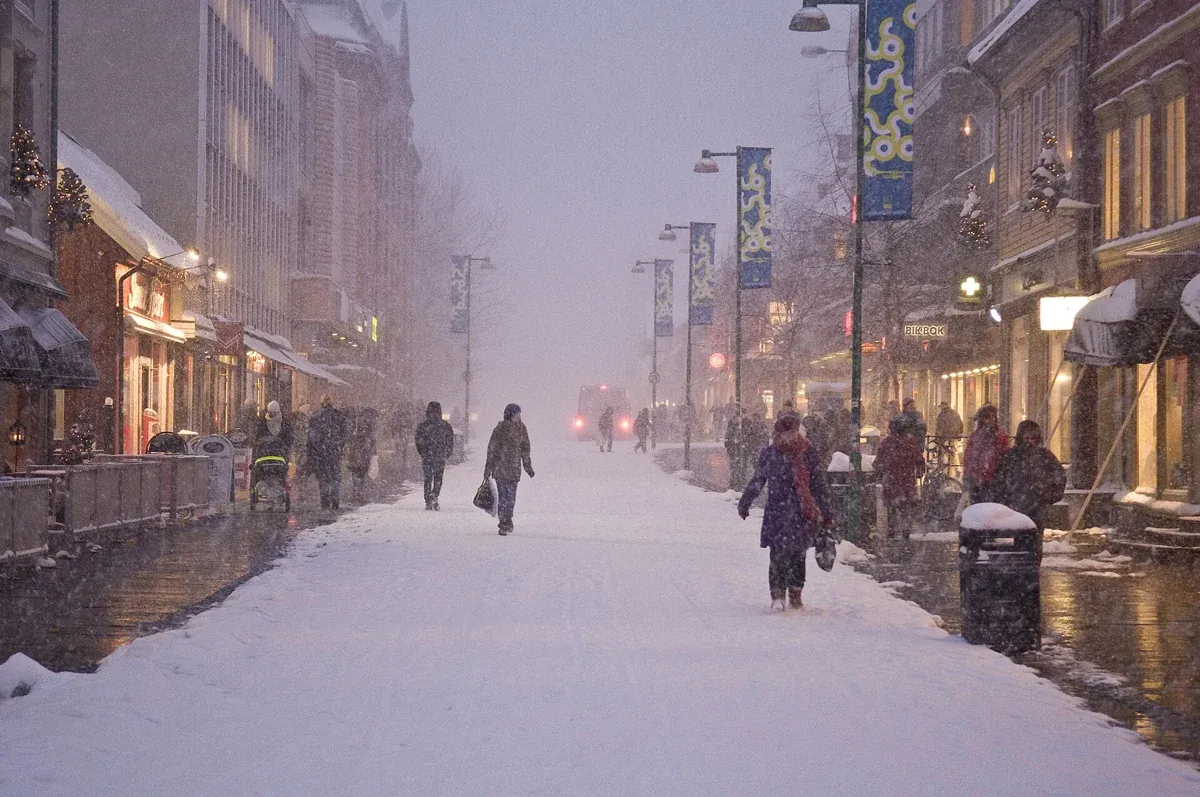
A winter day on Storgata in Tromsø. Photo: The Municipality of Tromso from Tromsø, Norway, CC BY 2.0, via Wikimedia Commons.
Polar Night Season (December to January): Sled by Headlamp and Twilight
The sun does not rise above the horizon in Tromsø during the polar night, but it is not pitch black around the clock. A few hours of blue twilight give the landscape a deep, even light. January highs average -1.0°C (30°F) and lows -5.3°C (22°F), colder at the camps, so layers matter now, which our packing guide for what to wear in Tromsø in winter covers in detail.
- Snow conditions are fully reliable once the season is running
- Daylight is limited to a short blue twilight around midday
- Night departures get the widest northern lights window of the year
- Trade-off to accept: the cold is real and the sled ride happens mostly in the dark
If darkness puts you off, remember it cuts both ways. The same long nights that hide the trail also make an evening run like night reindeer sledding with dinner and a chance of northern lights possible, which has no equivalent in the bright months.
Late Winter (February and March): Daylight Returns, Snow Is at Its Best
February and March are the strongest months for a first visit. Daylight stretches out quickly after the polar night ends in mid-January. The light is low and golden for much of the day, which photographers prize.
Crowds are high, especially around Sámi Week in early February, so reserve several days ahead.
- Most reliable trail conditions of the whole season
- Enough daylight for unhurried day tours and photos
- Evening aurora tours still run, since March nights stay dark enough
- Prices and availability: high demand, so earlier booking means better choice
- One honest trade-off: you share the trails with the season's biggest crowds
Inland camps such as Camp Tamok reindeer sledding in the Tamok valley lie a 90-minute drive from the coast.
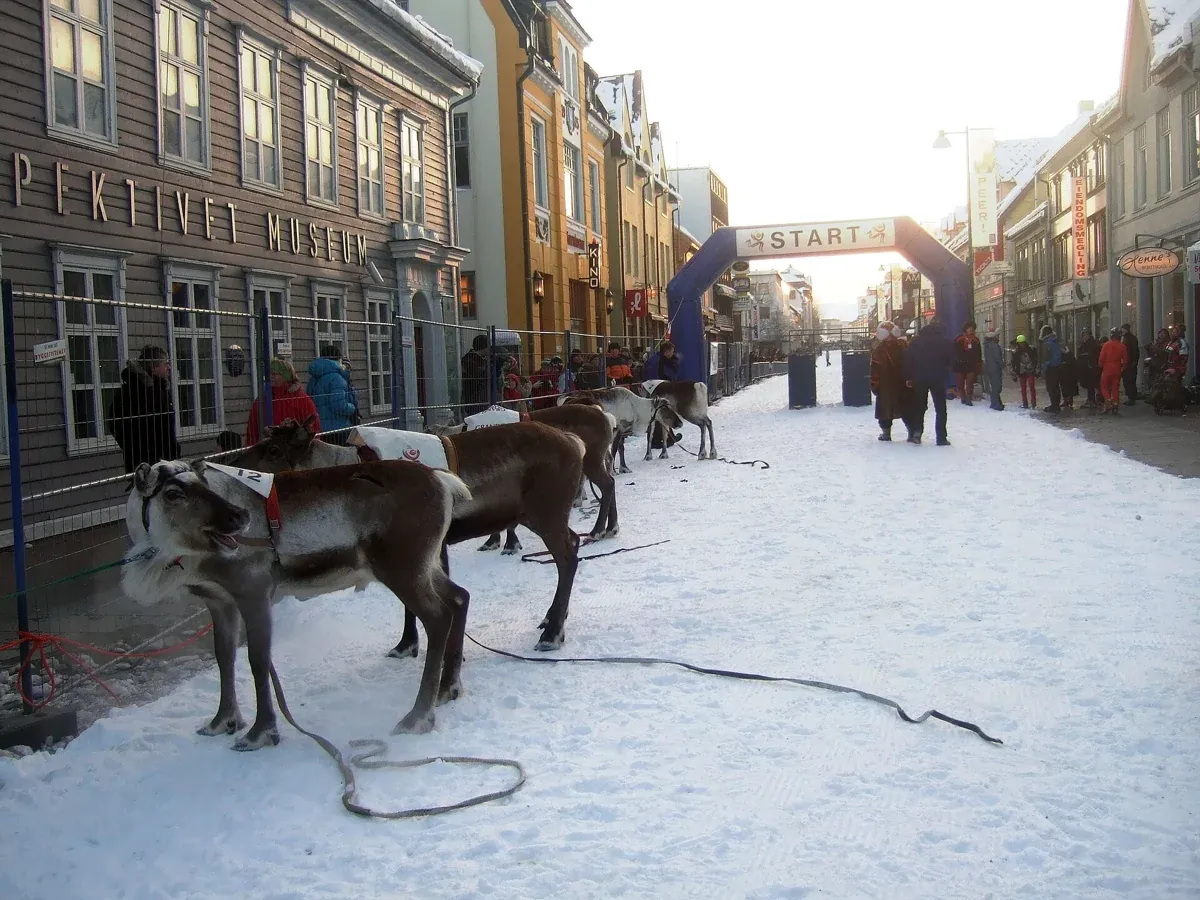
Reindeer at the start line of a Sámi reindeer race. Photo: Harald Groven, CC BY-SA 2.0, via Wikimedia Commons.
The Edges of the Season: November and Early April
The season opens in November when the snow arrives and closes in early April when the trail gives out. Both edges are honest gambles that the listings themselves acknowledge. A November departure can be superb, with quiet trails and early aurora, or it can be delayed while the camps wait for snow.
Two practical notes for shoulder-season bookers. First, some listings state a partial refund if snow conditions prevent sledding, so read the cancellation terms before paying, and expect a feeding visit or a refund rather than a ride when the snow fails. Second, keep a spare day in Tromsø if sledding is a priority for you, because shifting your booking by twenty-four hours is the simplest fix for a marginal trail.
Mid-April onward, sledding stops and the camps switch to feeding and culture visits.
Summer Visits: Feeding and Culture, No Sledding
From late spring through summer there is no ridable snow at the camps, and no honest operator will sell you a sled ride. What does continue is the feeding and culture side of the season, where you meet the herd, hand-feed the reindeer and hear herders talk about the year. This is a different but genuine experience, not a consolation prize.
Summer is also when the herding year moves to the mountains and coastal pastures, so camp locations and formats differ from winter. If your trip falls between May and September, look at a visit such as reindeer feeding and Sami culture with lunch in a turf hut or pair feeding with a walk on a reindeer feeding and snowshoe hike with a Bidos lunch in the colder months. For background on the people behind the herds, our guide to Sami culture in Tromsø is a good starting point.
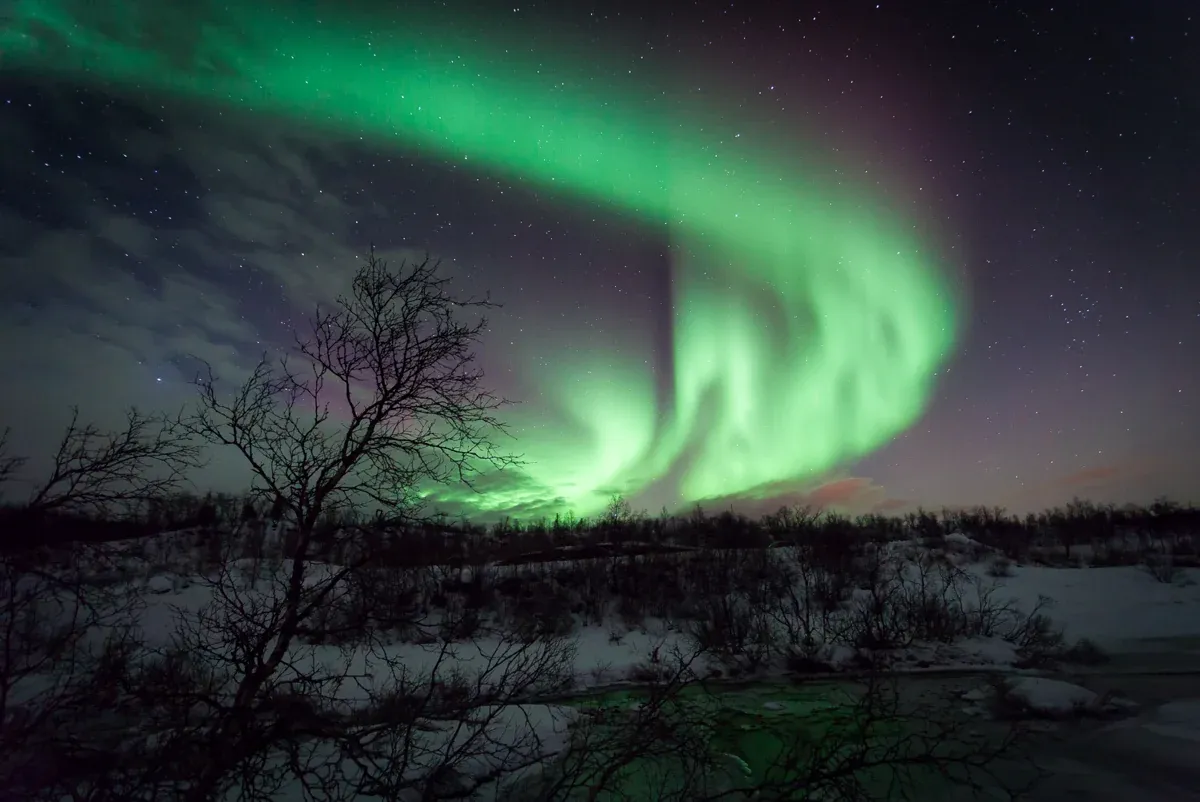
Northern lights on Ringvassøya, north of Tromsø. Photo: Svein-Magne Tunli - tunliweb.no, CC BY-SA 4.0, via Wikimedia Commons.
The Worst Time to Visit (Honestly)
The hardest window for sledding is October into early November, before the season reliably opens. Snow at the camps is often thin or absent, and the snowshoe tour, for one, does not start until 1 December. Book a sled ride in that stretch and you are gambling on the weather delivering.
It still suits travelers whose priority is the city itself, cheap rooms and quiet streets, or photographers chasing autumn color and the first auroras of the season without the crowds.
The other weak spot is late April, at the end of the snow season. If sledding is the reason you are coming, avoid both stretches. If culture is the reason, October can still work well with a feeding visit, because the herd is there and the sled is not required.
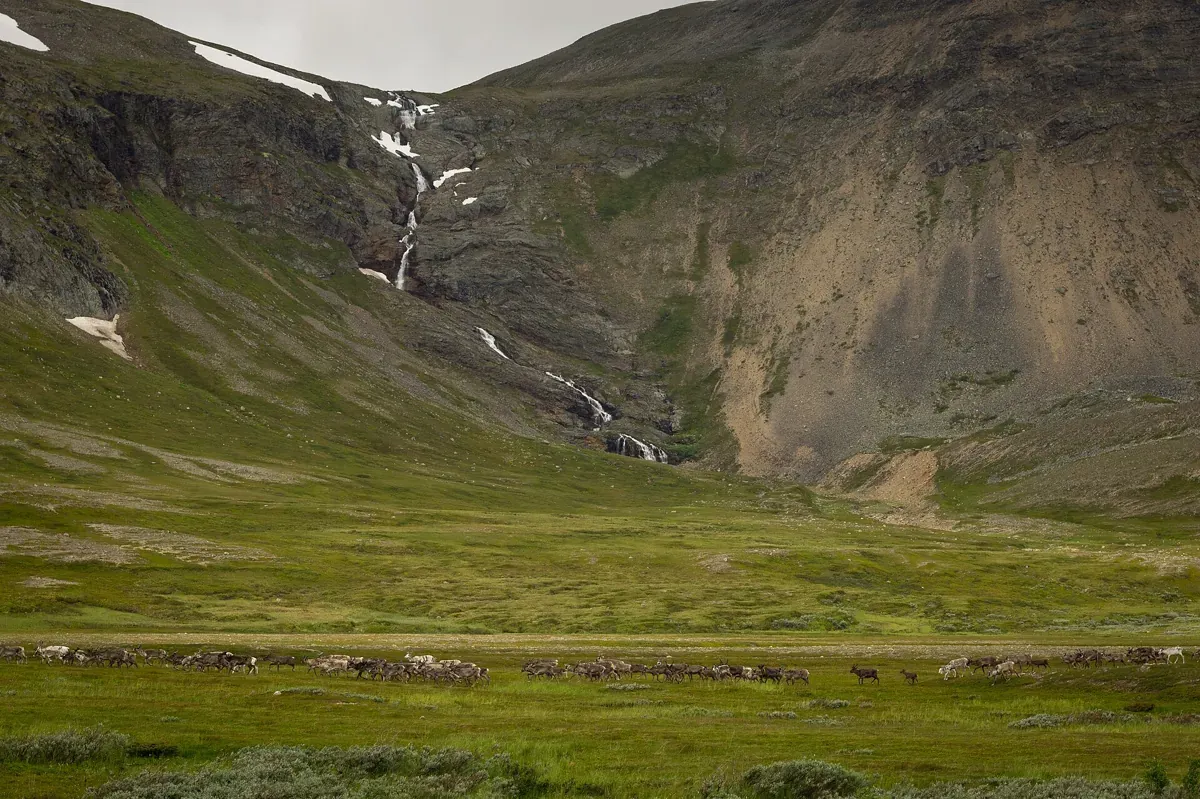
Reindeer on summer pasture, when there is no sledding. Photo: Lauri Rantala from Espoo, Finland, CC BY 2.0, via Wikimedia Commons.
What Actually Affects Whether You Can Sled
Tromsø sits on a coast warmed by the sea, so rain and sleet can strip the snow there while the inland camps, a short drive away, hold a deep dry base all winter. The reverse also happens, which is why a green December morning in Tromsø does not mean your ride is cancelled.
What matters is the snowpack at the camp itself. Sled trails need a settled base, cut and packed, not just a fresh fall. The herding calendar matters too.
Reindeer are semi-domesticated in Norway and herding is protected as a Sámi livelihood under Norwegian law, as the International Centre for Reindeer Husbandry explains, so the winter season is shaped around the animals' rhythm, not only the tourist calendar.
Best Time of Day for Reindeer Sledding
There is no single magic hour, because the right slot depends on the month. From February onward, the middle of the day gives the best light, with the low sun turning the snow gold for several hours around midday. In December and January the choice is different, since daylight barely exists, so you are really choosing between blue twilight and full darkness.
Our recommendation: in the dark months, take the evening slot, because you lose almost nothing in visibility and gain the aurora window, for example on a Sami reindeer camp visit combined with a northern lights night. From late February through the rest of the season, take the daytime slot for light, warmth and photos. Morning departures also leave your evening free.
Crowds, Events and Prices Through the Year
Tromsø's visitor year has clear peaks, and sledding demand follows them. Early February adds Sámi Week, with reindeer racing on Storgata, to the aurora season. Summer brings cruise-ship days, which fill the city but not the sled trails, since there are none.
On price, listings across our catalog cluster in a similar band for equivalent sledding experiences, so the meaningful difference is availability rather than a deep seasonal discount.
So, When Should You Go?
Book December to March, with February and March as the strongest all-round picks for settled snow and real daylight. Choose December or January if northern lights on an evening run matters more to you than seeing the trail. Avoid October into early November and the second half of April, when the snow cannot be relied on, and expect feeding-only visits from late spring through summer.
If your heart is set on sledding, keep a spare day and read the cancellation terms, since some listings state a partial refund if conditions fail. Our full comparison of guided Tromso reindeer sledding lists every option by month.
Questions and Answers
What is the best month for reindeer sledding in Tromsø?
February and March are the strongest months, with the deepest settled snow base and the return of real daylight. December and January are just as reliable for snow but darker and colder. The whole workable window runs from November to early April.
Can you go reindeer sledding in Tromsø in October?
Usually not, because October comes before the snow season, which runs roughly from November to early April. If you are there in October, a feeding and culture visit is the realistic option. Sled tours typically begin in November once the snow arrives.
Can you go reindeer sledding in April?
Yes, in the first part of April, when some listings are still running on the spring snow base. Rides shorten as the month goes on and the season closes once the trail deteriorates. Check that a specific listing is still operating for your dates before booking.
Is there reindeer sledding in summer in Norway?
No, there is no sledding without snow, and the lowland trails are bare from late spring through summer. Camps switch to feeding and culture visits in that period. Plan a sled ride for the winter months instead.
Which month is best for Northern Lights in Tromsø?
The aurora season runs through the dark months from autumn into early spring, so December to March all offer strong chances on clear nights. Evening sledding departures in those months pair the two experiences.
Is it dark all day in Tromsø in winter?
During the polar night the sun stays below the horizon, but the sky is not black all day, with several hours of blue twilight around midday. Camps run tours through this period using headlamps, lights and fires. From February the daylight returns quickly.
What time of year is best for dog sledding?
Dog sledding around Tromsø follows the same snow logic as reindeer sledding, running through the winter months when the trails hold. The same December to March window applies, with the same caveats at the season's edges. See our comparison of husky sledding versus reindeer sledding in Tromsø for how the two differ.
Where do you see reindeer in Norway?
Reindeer herding in Norway is tied to Sámi communities, mainly across the northern counties and the mountain ranges further south. Around Tromsø you meet the animals at winter camps and feeding visits rather than in the wild. For context, the Sámi Parliament of Norway describes the herding livelihood, and Visit Tromsø lists Sami exhibitions at the university museum.